
Play Slope Online Free











Controls
Desktop: Left/Right Arrow Keys or A/D to steer
Mobile: Tilt device or touch left/right side of screen
Mobile: Tilt device or touch left/right side of screen
How to Play Slope
Playing Slope requires mastering just two controls: left and right movement. Use the arrow keys or A/D to steer your ball as it rolls down the endless slope. The ball accelerates automatically, so your only job is navigation.
Start by getting comfortable with the sensitivity. Small adjustments work better than dramatic turns, especially at higher speeds. The ball's momentum means overcorrecting often leads to falling off the opposite edge.
Watch the path ahead rather than focusing on your ball. This gives you more reaction time for upcoming obstacles. Red blocks mean instant death, so prioritize avoiding these above all else.
As speed increases, you will need to anticipate turns earlier. What feels like the right moment at slow speeds becomes too late when you are moving fast. Practice adjusting your timing as runs progress.
Start by getting comfortable with the sensitivity. Small adjustments work better than dramatic turns, especially at higher speeds. The ball's momentum means overcorrecting often leads to falling off the opposite edge.
Watch the path ahead rather than focusing on your ball. This gives you more reaction time for upcoming obstacles. Red blocks mean instant death, so prioritize avoiding these above all else.
As speed increases, you will need to anticipate turns earlier. What feels like the right moment at slow speeds becomes too late when you are moving fast. Practice adjusting your timing as runs progress.
Tips & Strategies
Focus on the center of the path when possible. This gives you room to adjust in either direction when obstacles appear suddenly.
Do not fight the ball's momentum. If you are drifting one direction, gentle corrections work better than sharp overcorrections that send you flying the other way.
Take breaks after frustrating runs. Slope requires concentration, and playing while tilted leads to worse performance. A fresh attempt after stepping away often yields better results.
Learn to recognize the obstacle patterns. While levels are procedurally generated, certain configurations repeat. Knowing how to handle common setups reduces the mental load during runs.
Do not fight the ball's momentum. If you are drifting one direction, gentle corrections work better than sharp overcorrections that send you flying the other way.
Take breaks after frustrating runs. Slope requires concentration, and playing while tilted leads to worse performance. A fresh attempt after stepping away often yields better results.
Learn to recognize the obstacle patterns. While levels are procedurally generated, certain configurations repeat. Knowing how to handle common setups reduces the mental load during runs.
Slope Features
Endless procedurally generated levels that never repeat exactly
Smooth 60fps gameplay optimized for browser performance
Minimalist neon visuals that prioritize clarity
Progressive difficulty that scales with your survival time
Global leaderboards for competitive players
No downloads or installations required
Works on both desktop and mobile browsers
Instant restart for quick retry sessions
Smooth 60fps gameplay optimized for browser performance
Minimalist neon visuals that prioritize clarity
Progressive difficulty that scales with your survival time
Global leaderboards for competitive players
No downloads or installations required
Works on both desktop and mobile browsers
Instant restart for quick retry sessions
About Slope
Slope stands as one of the most addictive browser games ever created, combining minimalist design with genuinely challenging gameplay. The premise is simple: guide a ball down an endless slope while avoiding obstacles. Yet this straightforward concept delivers an experience that keeps players coming back session after session.
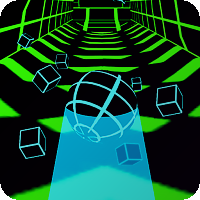
The moment you start playing Slope, you will notice the distinctive neon aesthetic. The green ball contrasts sharply against the dark, geometric environment, making it easy to track your position even at high speeds. This visual clarity is essential for a game that demands split-second reactions.
What makes Slope particularly compelling is its physics engine. The ball responds realistically to the terrain, gaining momentum on downhill sections and requiring careful control through turns. Unlike many casual games that feel floaty or imprecise, every movement in Slope feels deliberate and consequential. When you fall off the edge, you know exactly what went wrong.
The difficulty curve in Slope deserves special mention. Early sections let you get comfortable with the controls and build confidence. Then the game gradually introduces tighter turns, narrower platforms, and faster speeds. By the time you are deep into a run, you are navigating obstacles that seemed impossible just minutes earlier. This progression creates a satisfying sense of improvement.
Speed plays a crucial role in the Slope experience. The ball accelerates continuously, meaning the longer you survive, the harder the game becomes. This creates natural tension—do you play cautiously and risk losing focus, or push aggressively and risk a fatal mistake? Different players find different approaches work best.
The controls in Slope are refreshingly simple. Left and right arrows handle all movement. There is no jumping, no power-ups, no complex mechanics to master. This simplicity means anyone can start playing immediately, but the skill ceiling remains remarkably high. Watch experienced players and you will see techniques that take hours to develop.
One aspect that sets Slope apart from similar games is its procedural generation. While the game follows certain patterns, each run presents slightly different challenges. This prevents memorization from trivializing the experience and ensures that reflexes always matter more than rote learning.
The game runs smoothly in any modern browser without downloads or installations. Performance remains consistent even on modest hardware, which matters for a game where frame drops could mean instant failure. Mobile players can enjoy Slope too, though the precision of keyboard controls gives desktop players a slight edge.
Sound design in Slope enhances the experience without becoming distracting. The electronic soundtrack maintains energy without overwhelming, and audio cues for near-misses add tension to close calls. Many players find themselves entering a flow state where the music, visuals, and gameplay merge into pure concentration.
For competitive players, Slope offers global leaderboards that track high scores. Climbing these rankings requires not just skill but consistency—one good run means nothing if you cannot replicate it. The community around Slope remains active, with players sharing strategies and celebrating impressive runs.
Slope proves that browser games can deliver experiences rivaling dedicated gaming platforms. Its combination of accessible controls, challenging gameplay, and polished presentation creates something genuinely special. Whether you have five minutes or an hour, Slope offers exactly the kind of engaging distraction that made browser gaming popular.
The moment you start playing Slope, you will notice the distinctive neon aesthetic. The green ball contrasts sharply against the dark, geometric environment, making it easy to track your position even at high speeds. This visual clarity is essential for a game that demands split-second reactions.
What makes Slope particularly compelling is its physics engine. The ball responds realistically to the terrain, gaining momentum on downhill sections and requiring careful control through turns. Unlike many casual games that feel floaty or imprecise, every movement in Slope feels deliberate and consequential. When you fall off the edge, you know exactly what went wrong.
The difficulty curve in Slope deserves special mention. Early sections let you get comfortable with the controls and build confidence. Then the game gradually introduces tighter turns, narrower platforms, and faster speeds. By the time you are deep into a run, you are navigating obstacles that seemed impossible just minutes earlier. This progression creates a satisfying sense of improvement.
Speed plays a crucial role in the Slope experience. The ball accelerates continuously, meaning the longer you survive, the harder the game becomes. This creates natural tension—do you play cautiously and risk losing focus, or push aggressively and risk a fatal mistake? Different players find different approaches work best.
The controls in Slope are refreshingly simple. Left and right arrows handle all movement. There is no jumping, no power-ups, no complex mechanics to master. This simplicity means anyone can start playing immediately, but the skill ceiling remains remarkably high. Watch experienced players and you will see techniques that take hours to develop.
One aspect that sets Slope apart from similar games is its procedural generation. While the game follows certain patterns, each run presents slightly different challenges. This prevents memorization from trivializing the experience and ensures that reflexes always matter more than rote learning.
The game runs smoothly in any modern browser without downloads or installations. Performance remains consistent even on modest hardware, which matters for a game where frame drops could mean instant failure. Mobile players can enjoy Slope too, though the precision of keyboard controls gives desktop players a slight edge.
Sound design in Slope enhances the experience without becoming distracting. The electronic soundtrack maintains energy without overwhelming, and audio cues for near-misses add tension to close calls. Many players find themselves entering a flow state where the music, visuals, and gameplay merge into pure concentration.
For competitive players, Slope offers global leaderboards that track high scores. Climbing these rankings requires not just skill but consistency—one good run means nothing if you cannot replicate it. The community around Slope remains active, with players sharing strategies and celebrating impressive runs.
Slope proves that browser games can deliver experiences rivaling dedicated gaming platforms. Its combination of accessible controls, challenging gameplay, and polished presentation creates something genuinely special. Whether you have five minutes or an hour, Slope offers exactly the kind of engaging distraction that made browser gaming popular.
Arcade
395 plays
Browser (PC & Mobile)